You are here:

Is the Ocean Sunfish (Mola Mola) the Dumbest Fish in the Ocean?

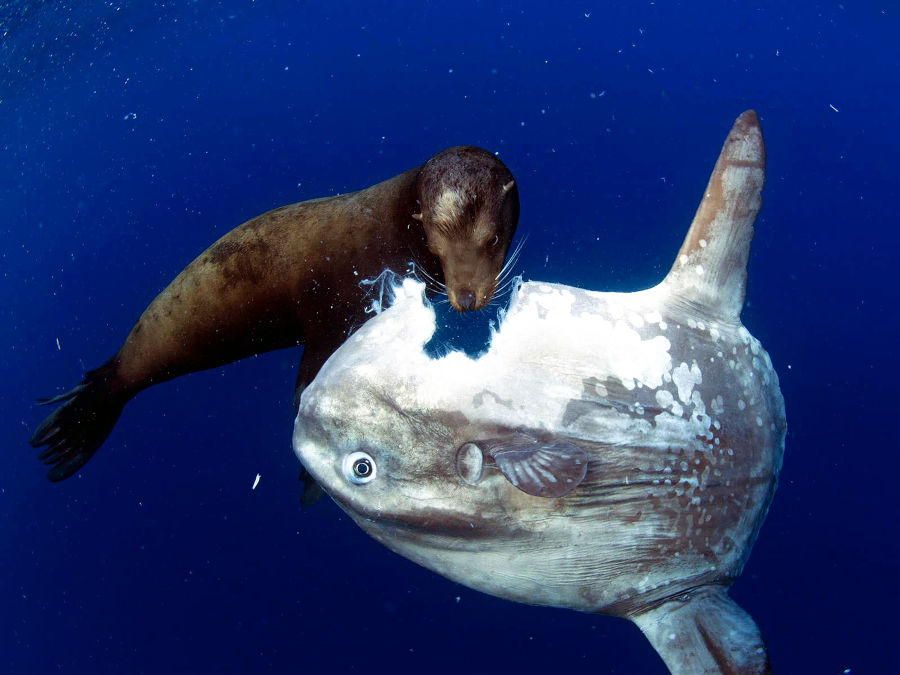
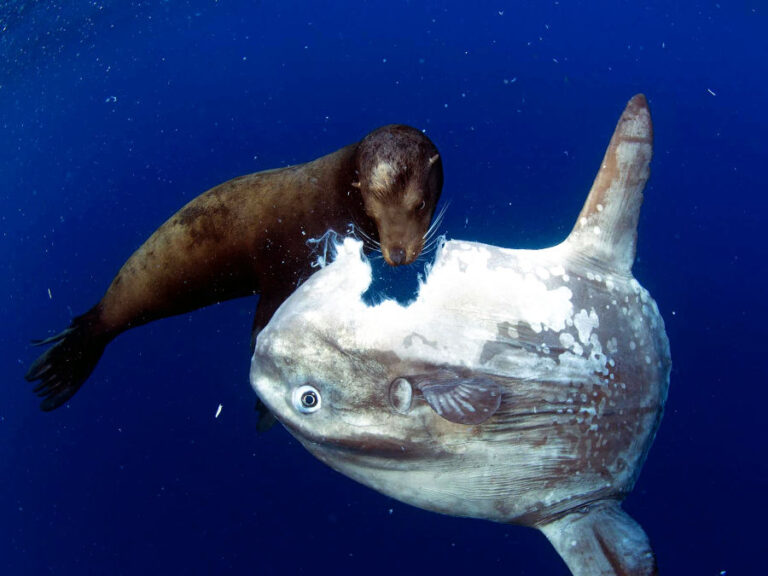
Seal eating Mola-mola (sunfish).
©Rich Herrmann

If you’ve spent any time scrolling through ocean memes or Reddit threads, you’ve probably seen the claim: the mola mola (ocean sunfish) is the dumbest fish in the ocean. Some posts even call it “nature’s mistake” or question how this bizarre creature has survived millions of years.

But no, the Mola Mola is not the dumbest fish in the ocean. This reputation is based on misunderstanding and internet exaggeration rather than science. In reality, ocean sunfish display specialized feeding behaviors, strategic movement patterns, and survival adaptations that have allowed them to thrive for millions of years.

Let’s look at what the science actually says.

Table of Contents

What Is a Mola Mola (Ocean Sunfish)?

Before we tackle the intelligence question, let me explain what a mola-mola is.

The mola mola, or ocean sunfish, is the world’s heaviest bony fish. The average adult weighs around 2,200 pounds (1,000 kg) and measures about 6 feet (1.8 meters) from snout to tail and 8 feet (2.4 meters) from the tip of the dorsal fin to the tip of the anal fin. The largest mola ever recorded weighed 2,300 kg and measured 14 feet (4.26 meters) from fin to fin.

They’re found in temperate and tropical oceans worldwide, and they have one of the most unusual body shapes in the animal kingdom: a massive, flattened disc that looks like someone forgot to finish building the back half of the fish.

Their scientific name, Mola-mola, comes from the Latin word for millstone, referring to their round, grey appearance. But don’t let the weird shape fool you. This fish is a highly evolved marine predator that’s been perfecting its survival strategy for approximately 50 million years.

The "Dumbest Fish" Myth: Where Did It Come From?

The viral claim that mola mola are stupid appears to have originated from a now-famous internet rant posted years ago. The post listed supposed “evidence” of mola mola stupidity, including claims that they:

  • Get stressed and die easily
  • Forget they’re swimming and drown
  • Jump out of the water and get confused
  • Have tiny brains relative to body size
  • Can’t defend themselves from predators

It was funny, shareable, and spread across social media like wildfire. The only problem? Almost none of it is true. Marine biologists who actually study these fish have spent the last several years debunking these claims one by one. Let’s look at what the science actually says.

Why Mola Mola Are Not the Dumbest Fish

Mola-mola Is An Expert Hunters

One of the most persistent myths is that mola mola are clumsy, ineffective feeders. In reality, they’re specialized jellyfish hunters..

Jellyfish are 95% water and provide very little nutritional value. To survive on this diet, mola mola have developed impressive hunting efficiency.

According to fishbase.se mola-mola can dive to depths range from 30-1515 meters in search of prey, navigating through different temperature zones and pressure changes that would confuse less adapted species.

Research published in Marine Biology found that mola mola actively hunt rather than passively drift.

They use vertical diving patterns to find and catch jellyfish blooms, showing they have a real hunting strategy. That’s not the action of a “dumb” fish, that’s smart prey tracking.

Their Small Brain Doesn't Mean They're Stupid

The “tiny brain” criticism is actually true. A 440-pound (200 kg) young mola mola has a brain that weighs only about 4 grams, roughly the size of a walnut. Even smaller individuals show the same pattern. That’s an incredibly small brain for their body size, no matter how you look at it.

But here’s the thing: brain size doesn’t tell the whole story about intelligence.

What matters isn’t how big your brain is compared to your body. Mola mola successfully navigate thousands of miles across open ocean, remember where food sources are located, time their movements to match seasonal jellyfish blooms, and interact with cleaner fish at cleaning stations. These are complex behaviors that require real intelligence.

Sunfish Navigate Ocean Currents Strategically​

Far from aimlessly drifting, mola mola are capable swimmers that always do seasonal migrations covering hundreds of miles. Studies using satellite tags have tracked individual sunfish migrating from Taiwan to Papua New Guinea and Japan, journeys spanning thousands of miles across open ocean.

This requires navigating complex ocean currents, maintaining direction over vast distances, and timing movements to match seasonal jellyfish blooms.

They Have Effective Survival Strategies

The viral post claims that mola mola jump out of the water and get so confused they can’t find their way back, or that they panic and die from stress. This is completely false.

Mola mola do occasionally breach (jump out of the water), but scientists believe this behavior serves practical purposes: removing parasites, stunning prey, or communicating with other sunfish. It’s intentional behavior, not confusion. When they return to the water, they do it on purpose.

As for the “dying from stress” claim, mola mola are actually quite resilient. Their thick, rubbery skin (which can be up to 7.5 cm thick) provides excellent protection from predators. Adult mola mola have very few natural enemies. Orcas and large sharks occasionally prey on them, but most potential threats are too small to pose real danger.

By not wasting energy fleeing from non-threats, mola mola conserve resources for reproduction. A female can produce up to 300 million eggs in a single spawning, more than any other vertebrate on Earth. That’s not a failing survival strategy, that’s a successful one.

Mola-mola "Sunbathing" Behavior Isn't Confusion

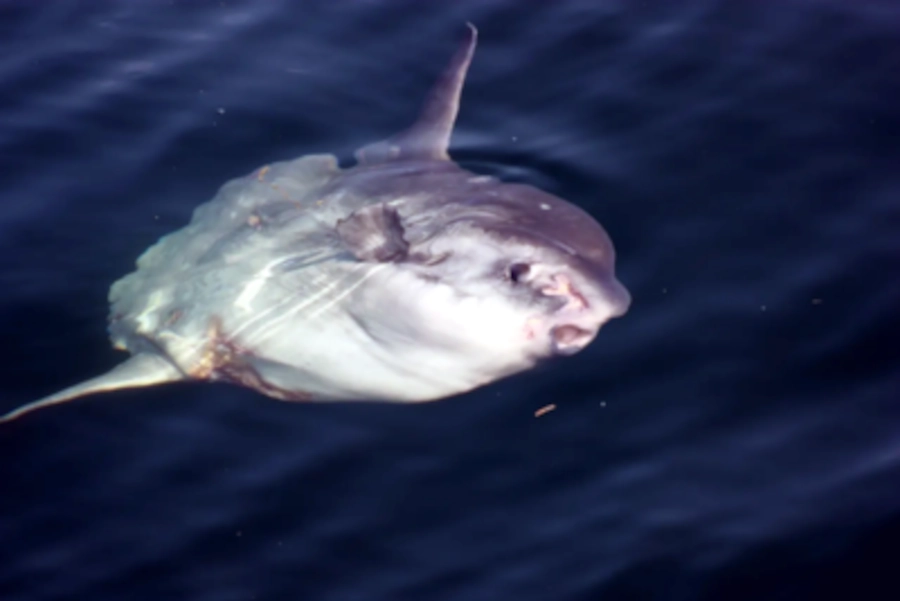
One of the most iconic mola mola behaviors is also one of the most misunderstood. These fish regularly come to the ocean surface and lie on their sides, appearing to sunbathe. The viral myth claims they do this because they’re confused or forgot they were swimming. The actual explanation turns out they’re doing sunbathing. It’s actually a sign of a healthy, smart fish doing two important things at once.

Mola-mola Warming Up After Deep Dives

Mola mola dive up to 40 times a day, typically reaching depths of 94 to 170 meters to find food, though they can go as deep as 1515 meters. These deep dives lower their body temperature significantly. By coming to the surface and basking in the sun, they warm themselves back up before the next deep dive.

Mola-mola Getting a Full-Body Clean

Mola mola can host more than 40 types of parasites on their skin. Lying on their side at the surface is actually a smart move. Seabirds land on top and pick off parasites from the upper side, while cleaner fish beneath the surface take care of the bottom side. The mola mola gets a full-body clean without doing anything extra.

Why Does It Matter If We Get Mola Mola Facts Right?

Beyond just setting the record straight, the “dumbest fish” narrative has real consequences.

Mola mola populations face genuine threats including bycatch in commercial fishing operations, and habitat degradation.

Understanding that these are highly evolved, successful animals helps build the respect necessary for effective conservation. They’ve survived and thrived for 50 million years by being exceptionally good at what they do, not despite being “dumb.”

Where You Can See Mola Mola in the Wild

If learning about these fascinating fish make you curious, good news: you can actually dive with mola mola in several locations around the world. One of the most reliable and accessible spots is Nusa Penida – Bali, Indonesia.

Mola Mola Season in Bali

From July through October, mola mola migrate to the waters around Nusa Penida, a small island southeast of Bali. During this seasonal window, divers have the opportunity to encounter these gentle giants in their natural habitat.

The reason they appear predictably in Bali during these months relates to ocean currents and temperature. Cold water upwellings bring nutrient-rich waters and jellyfish blooms to the area, creating ideal feeding conditions. Mola mola follow the food, and divers follow the mola mola.

What It's Like to Dive With Mola Mola

Seeing a mola mola underwater is surreal. Their massive size combined with their unusual shape makes them look almost alien. They move with slow, deliberate fin beats, rotating their large dorsal and anal fins in a synchronized swimming motion.

Despite their size, they’re completely harmless to divers. In fact, they’re often curious and unbothered by human presence. Mola mola have been known to swim within meters of divers, close enough to see the patterns of parasites and small fish that live on their skin.

The dive sites around Nusa Penida where mola mola appear, like Crystal Bay and Blue Corner, typically sit at depths of 18 to 40 meters. The water can be cold (thermoclines drop temperatures into the low around 19/22°C), and currents can be strong, which is exactly what brings the mola mola to these spots.

Planning Your Mola Mola Dive in Bali

If you’re interested in diving with mola mola in Bali, timing is everything. Peak season runs from July through early October, with August & September offering the highest probability of sightings.
Keep in mind these are wild animals in a vast ocean. Even during peak season, sightings aren’t guaranteed, but that’s what makes spotting one so special. Divers should be comfortable with deeper dives, potentially strong currents, and cooler water temperatures. An Advanced Open Water certification is typically recommended for these dive sites.

Final Thoughts: Mola Mola Deserve Better

The next time you see a mola mola meme calling them nature’s mistake or the dumbest fish alive, you’ll know better. These amazing animals are evolutionary success stories, perfectly adapted to their unique ocean lifestyle.

They’re not confused when they sunbathe. They’re not forgetting to swim. They’re not poorly designed mistakes stumbling through the ocean. They’re doing exactly what 50 million years of evolution has equipped them to do: hunt jellyfish, avoid predators, reproduce like crazy, and thrive in oceans worldwide.

And if you get the chance to see one while diving in Bali during mola mola season, you’ll witness firsthand just how graceful and purposeful these “clumsy” fish actually are. There’s something special about watching a creature the size of a car glide past you underwater.

The ocean is full of wonders we barely understand. The mola mola is one of them. And that’s something worth celebrating, not mocking.

Facebook
LinkedIn
X
WhatsApp
Email

FAQs About Mola-Mola

No, this is a myth. While mola mola do have small brains relative to their body size, they demonstrate complex behaviors including strategic hunting, long-distance migration, interaction with cleaner fish, and temperature control. Marine biologists have spent years debunking the viral “dumbest fish” claims.

The myth started from a viral internet post that listed supposed “evidence” of mola mola stupidity, including claims they forget to swim, get confused when jumping, and die easily from stress. It was funny and spread across social media, but almost none of it is true. Marine biologists who study these fish have debunked these claims one by one.

No. Mola mola do occasionally breach (jump out of the water), but scientists believe this serves practical purposes like removing parasites, stunning prey, or communicating with other sunfish. It’s intentional behavior, not confusion.

Mola mola typically hunt at depths 94-170 meters, diving up to 40 times per day. However, they come to shallower depths 18-40 meters around cleaning stations in places like Nusa Penida, which is where divers can see them.

Mola mola are specialized jellyfish hunters. Jellyfish are 95% water and provide little nutrition, so mola mola have developed impressive hunting efficiency. They dive up to 40 times a day to find and catch jellyfish blooms, showing real hunting strategy.

No, this is another myth. Mola mola are actually quite resilient. Their thick skin (up to 3 inches or 7.5 cm) provides excellent protection. A female can produce up to 300 million eggs in a single spawning, more than any other vertebrate on Earth. That’s an extraordinarily successful survival strategy.

The average adult weighs around 2,200 pounds (1,000 kg) and measures about 6 feet (1.8 meters) from snout to tail and 8 feet (2.4 meters) from fin to fin. The largest mola ever recorded weighed 4,927 pounds (2,300 kg) and measured 14 feet (4.26 meters) from fin to fin.

Yes! Mola mola can be seen at several diving destinations around the world, with Bali’s Nusa Penida being one of the most reliable spots during July-October. You can also see them at public aquariums like Monterey Bay Aquarium in California, Kaiyukan in Osaka, Japan, and Lisbon Oceanarium in Portugal.

Illustration of Thresher shark encounter in Nusa Penida Bali

Are there Sharks in Bali?

Bali and its surrounding islands offer scuba divers the thrill of encountering a surprising variety of shark species. From tranquil coral reefs patrolled by reef sharks to rare appearances of…

Read more