PADI Rescue Diver Course Bali – The Most Rewarding Course You Will Take
Learn to prevent and manage diving emergencies – in the pool, on the surface, and underwater. The course every serious diver takes.

Learn to prevent and manage diving emergencies – in the pool, on the surface, and underwater. The course every serious diver takes.
Home » Bali Diving Course » PADI Rescue Diver in Bali
The PADI Rescue Diver course is widely considered the most rewarding course a recreational diver can take. Unlike previous courses that focus on your own diving skills, the Rescue Diver course shifts your attention outward – teaching you to recognise problems in other divers before they escalate, respond to emergencies above and below the surface, and manage real-world diving incidents with confidence.
The course combines PADI eLearning theory completed at home, confined water skill practice in a swimming pool, and open water rescue scenarios at Bali’s top dive sites. There is no written exam – your performance is assessed through practical scenarios throughout the course.
The Rescue Diver certification is also the final recreational certification required before the PADI Divemaster course – making it an essential step for any diver considering a professional diving career. For recreational divers, it is simply the certification that makes you the buddy everyone wants to dive with.
The Rescue Diver course is not reserved for divers planning a professional career. It is the single most practical certification any recreational diver can hold – and the one most often described as life-changing by those who complete it.
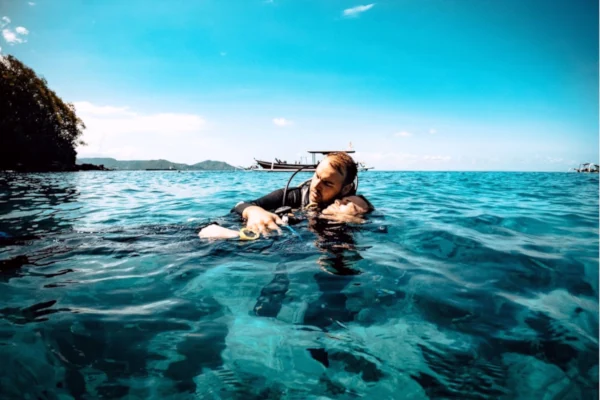
Handling an unconscious diver on the surface
The Rescue Diver course covers a progressive set of skills that build from personal awareness to full emergency management. Each skill is practiced first in the pool, then applied in realistic open water scenarios.
Before you can help others, you need to manage yourself. You will learn to recognise and control your own stress underwater, handle equipment malfunctions calmly, manage cramps and out-of-air situations, and make sound decisions under pressure. These skills make you a fundamentally better diver regardless of whether you ever need to rescue anyone else.
Most diving emergencies do not appear suddenly – they develop from stress that goes unrecognised. You will learn to read the signs of diver distress at the surface and underwater, approach and calm a stressed diver without putting yourself at risk, and provide assistance before the situation escalates into a full emergency.
You will practice rescuing both panicked divers – who may be actively fighting and pose a risk to rescuers – and unresponsive divers who require immediate surface management and emergency breathing assistance. These are the most physically demanding skills in the course and the ones that build the most confidence on completion.
The final stage of the course covers broader emergency management – conducting underwater searches for missing divers, providing in-water artificial respiration, managing a dive emergency from first response through to handover to emergency services, and completing accurate incident reports. You will run through realistic full-scenario exercises that tie all previous skills together.
The PADI Rescue Diver course runs over 2 full days. Theory is completed at home via PADI eLearning before you arrive – your time in Bali is spent entirely on practical training. If you do not yet hold a valid EFR certification, the half-day EFR course can be completed the day before your Rescue course begins.
EFR certification can be completed the day before your Rescue course – half day classroom session. Contact us to arrange the combined EFR + Rescue Diver package at 8,400,000 IDR.
All prices include PADI eLearning, full equipment rental, transport from your hotel, marine park fees, lunch, and PADI certification fee.
6,200,000 IDR
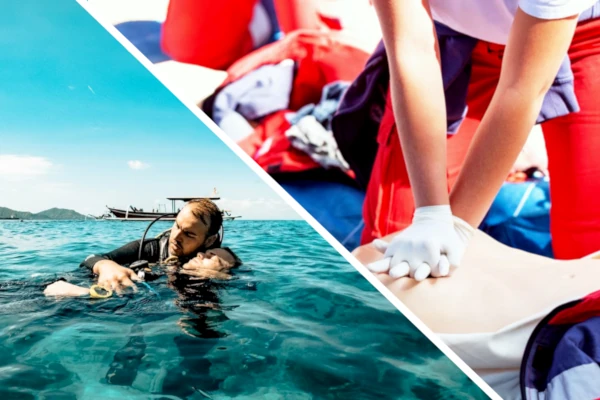
8,400,000 IDR
Students receive a 10% discount on fun dives after completing the Rescue Diver course. Ask us when booking.
The PADI Rescue Diver course has straightforward prerequisites. If you do not yet meet all requirements, contact us – we can build a pathway that includes everything you need.
Not sure if your certification qualifies? Contact us to confirm before booking.
The Rescue Diver certification opens two distinct pathways depending on your goals – the highest recreational diving rating, or the first step into professional diving.
The PADI Master Scuba Diver rating is the highest recreational certification available – held by less than 2% of divers worldwide. To achieve it you need your Rescue Diver certification plus 5 PADI Specialty certifications and 50 logged dives. If you are already collecting specialties, the Master Scuba Diver rating may be closer than you think. See our PADI Specialty courses for preferred rates on specialties for Bali Aqua students.
The Rescue Diver certification is the final recreational certification required before the PADI Divemaster course – the first level of professional diving. At Bali Aqua, our Responder to Divemaster pathway takes you directly from Rescue Diver to certified Divemaster in a minimum of 8 weeks. Learn more about our Divemaster internship in Bali.
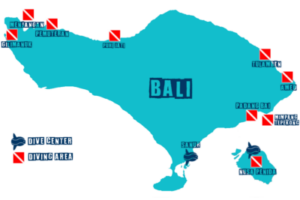
The standard Rescue Diver course takes 2 days – Day 1 is confined water training in the swimming pool and Day 2 is open water rescue scenarios at Padang Bai or Tulamben. If you need to complete your EFR certification first, the combined EFR + Rescue package runs over 3 days total. Theory is completed at home via PADI eLearning before you arrive.
Yes. As long as you hold a valid EFR certification within the last 24 months, you can begin the Rescue Diver course the day after completing your Advanced Open Water certification. If your EFR has expired or you have not yet completed it, our combined EFR + Rescue package at 8,400,000 IDR covers everything in one seamless 3-day program.
The Emergency First Response course focuses on first aid and CPR skills for surface and land-based emergencies. The PADI Rescue Diver course builds on EFR training and focuses specifically on underwater rescue scenarios, diver stress recognition, and in-water emergency management. Both certifications are required before starting the PADI Divemaster course. If your EFR certification has expired or you have not yet completed it, we offer a combined EFR + Rescue Diver package at 8,400,000 IDR.
The Rescue Diver course is widely described as challenging but deeply rewarding. It requires physical effort – swimming, towing, and managing other divers – and problem-solving under pressure. However the course is designed to build confidence progressively. Your instructor coaches you through each skill at your own pace and our small group sizes ensure you receive personalised attention throughout.
No. The Rescue Diver course is valuable for any recreational diver who wants to be a more confident, capable, and safety-conscious buddy. Many divers describe it as the most personally rewarding course they have ever taken – not because of career goals, but because of the confidence and awareness it develops. It is also a prerequisite for the Master Scuba Diver rating, the highest recreational certification available.
The course includes 2 open water dives on Day 2, conducted at Padang Bai or Tulamben depending on your package. Day 1 is a full day of confined water training in the swimming pool where you practice all core rescue skills before applying them in open water scenarios.
You have two main options. For recreational divers, the next step is collecting PADI Specialty certifications toward the Master Scuba Diver rating – the highest recreational certification available. For divers considering a professional career, the Rescue Diver certification is the final prerequisite before the PADI Divemaster course. At Bali Aqua, our Responder to Divemaster pathway takes you from Rescue Diver to certified Divemaster in a minimum of 8 weeks.
All diving equipment is provided. Bring a swimsuit, sunscreen, a change of clothes, and a reusable water bottle. Complete your PADI eLearning before arriving to make the most of your training days. If you have your own mask, fins, or wetsuit, you are welcome to bring them for a more comfortable fit.